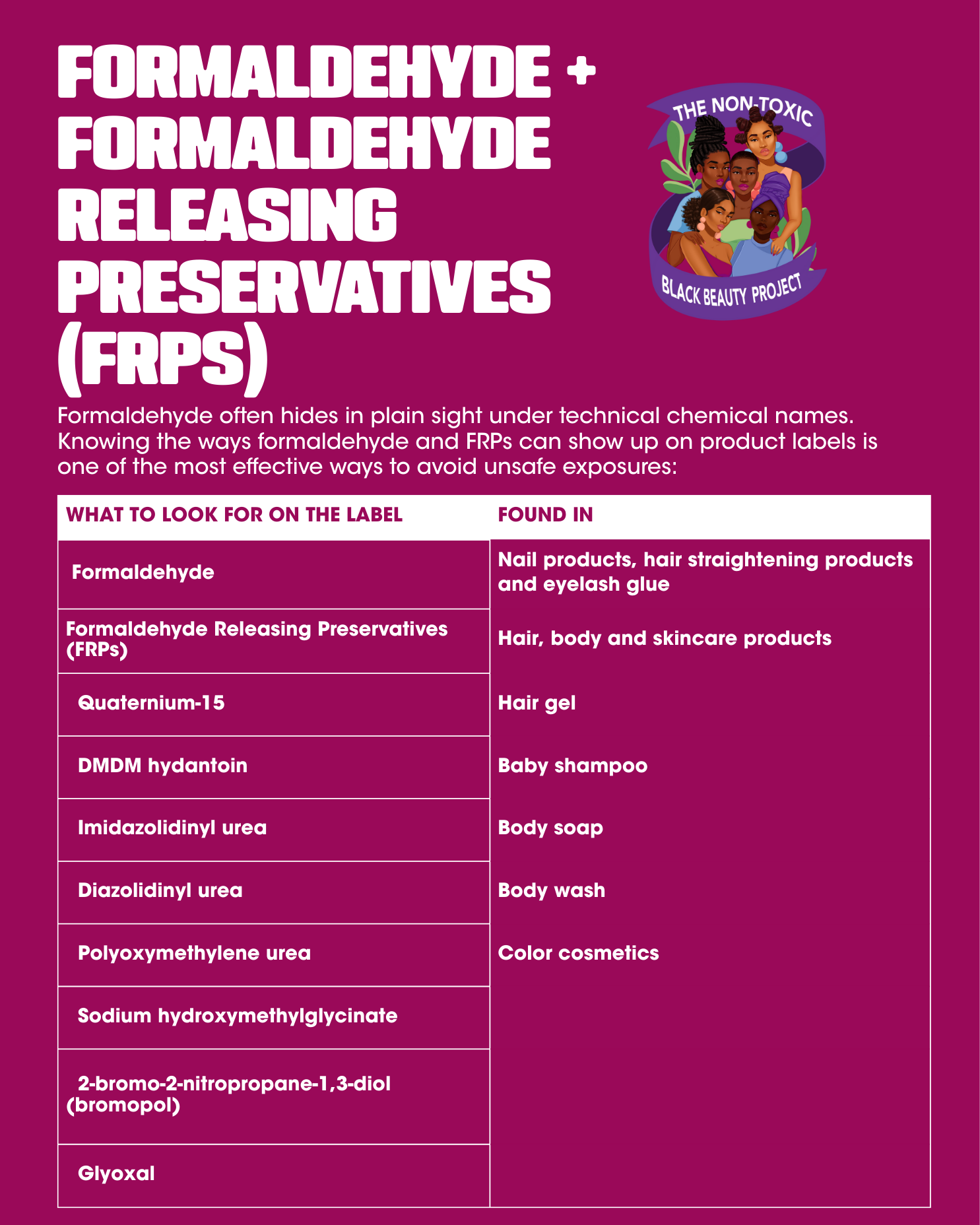
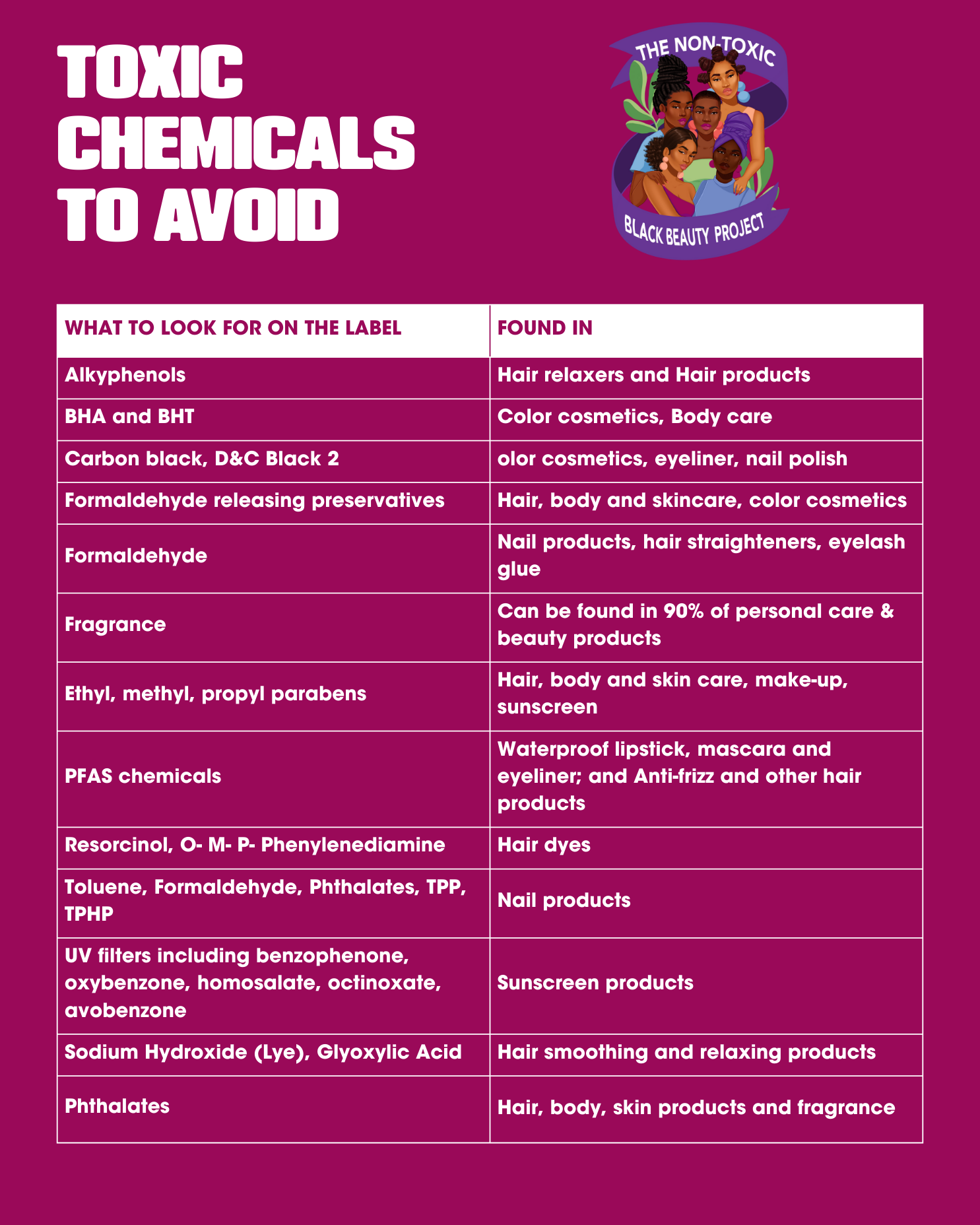
Even today, highly toxic chemicals like formaldehyde—known for over 50 years to cause cancer—show up in 80% of the beauty products marketed to Black women. And the impact on our health is clear.1
It’s time for real equality in beauty—not just the appearance of it. It’s time we looked past “killer looks” and focused on the toxic products behind them. It’s time we finally cleansed the beauty industry of cancer-causing ingredients.
Because Black women deserve better choices.
Demand Beauty Justice
Despite knowing of the dangers that surround formaldehyde for decades, the FDA has yet to act—while formaldehyde is already banned in the European Union and Japan.
RFK Jr has the power to change this. Join our letter campaign to demand he take action, and you could win a 100% safe make-over from a celebrity stylist!
Take Action
*All fields with an asterisk (*) and check box are required.
Get The Facts On GTF*O
The numbers aren’t pretty
80%
of products marketed to Black women are classified as “moderate” or “high hazard”1
50%
of hair products marketed to Black women contain endocrine-disrupting chemicals (vs 7% for White women)2
50%
of Black and Latina women in LA report using beauty products with formaldehyde or formaldehyde-releasing chemicals3
1in4
hair relaxers contain at least one formaldehyde-releasing chemical1
Neither is what they add up to
80%
increase in uterine cancer risk for Black women who regularly straighten their hair4
60%
increase in breast cancer risk for Black women who use permanent hair dye5
42%
higher breast cancer mortality rate for Black women than White women6
Risk
of asthma, infertility, uterine fibroids, neurological issues, and birth defects7
Get the latest on the campaign and how you can help Get The Formaldehyde Out
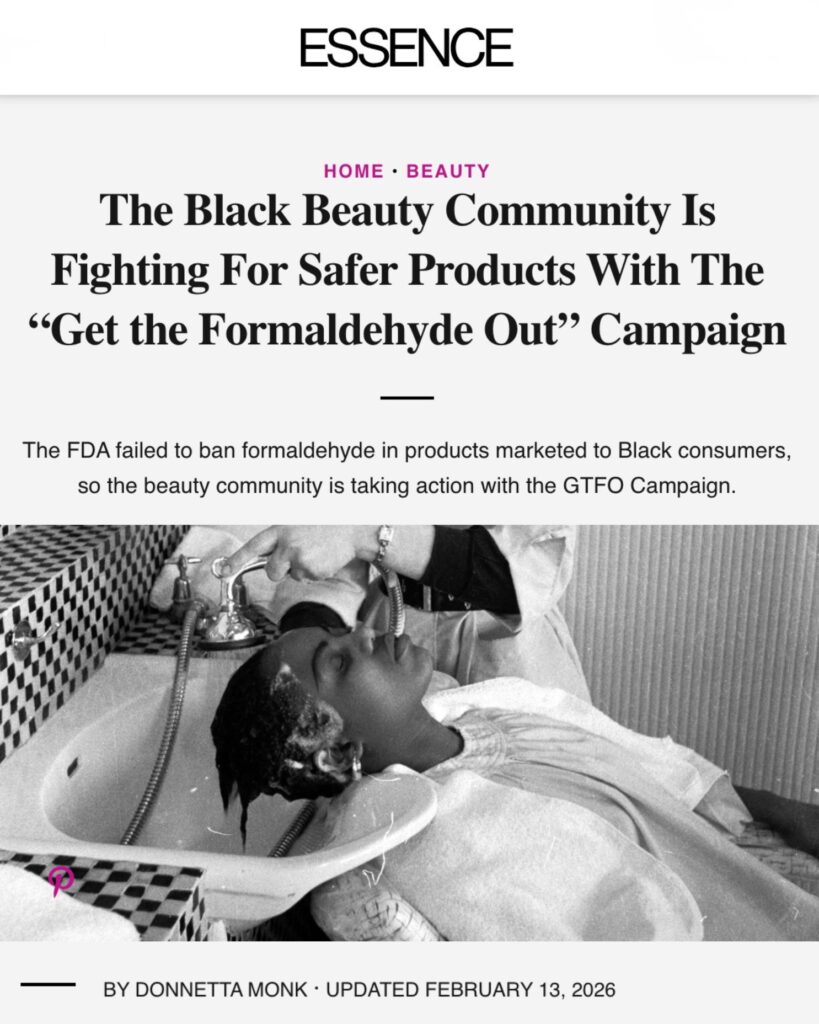
Essence Exclusive
Tool Kit
Tip Cards
Tip Cards
About GTF*O
GTFO (“Get the Formaldehyde Out”) is a California Beauty Justice advertising and public education campaign exposing the presence of formaldehyde and other toxic chemicals in beauty and personal care products marketed to Black women. With seed funding from the Rose Foundation for Communities and the Environment, the campaign is raising public awareness, generating consumer demand for safer products, growing the clean Black beauty market, and advancing policy solutions to reduce the presence of formaldehyde and other hazardous chemicals in beauty products that are contributing to health disparities in Black women and girls.
Organized by Breast Cancer Prevention Partners’ Campaign for Safe Cosmetics, GTFO is mobilizing the public to demand that HHS Secretary Robert F. Kennedy, Jr. direct the FDA to swiftly move forward its stalled ban on cancer-causing formaldehyde and formaldehyde-releasing chemicals in hair relaxers and straighteners, and expand the ban to include other hair care and hair styling products.
Formaldehyde—a known human carcinogen linked to cancer and reproductive harm—remains legally used in U.S. cosmetics despite decades of scientific evidence demonstrating its harm to human health. GTFO will spotlight the injustice of toxic Black beauty products, elevate beauty justice NGOs and Black-owned businesses leading change, and connect consumers to safer options—starting with our Black Beauty Database featuring 102 Black-owned brands and more than 1,500 formaldehyde-free products, also free of nearly 250 other chemicals of concern.
Get. The. F*. Out.
Thank you to our funder, Rose Foundation for Communities and the Environment, whose generous support made this work possible.
Dodson, R. E.; et al. Formaldehyde and Formaldehyde-Releasing Preservatives in Personal Care Products Used by Black Women and Latinas. Environ. Sci. Technol. Lett. 2025, 12 (9), 1205–1210. https://doi.org/10.1021/acs.estlett.5c00242
Bertrand, K. A.; Delp, L.; Coogan, P. F.; et al. Hair Relaxer Use and Risk of Uterine Cancer in the Black Women’s Health Study.Environ. Res.2023, 239 (Pt 1), 117228. https://doi.org/10.1016/j.envres.2023.117228
Eberle, C. E.; Sandler, D. P.; Taylor, K. W.; White, A. J. Hair Dye and Chemical Straightener Use and Breast Cancer Risk in a Large US Population of Black and White Women. Int. J. Cancer2020, 147 (2), 383–391. https://doi.org/10.1002/ijc.32738
DeSantis, C. E.; Siegel, R. L.; Sauer, A. G.; et al. Cancer Statistics for African Americans, 2016: Progress and Opportunities in Reducing Racial Disparities. CA Cancer J. Clin. 2016, 66 (4), 290–308. https://doi.org/10.3322/caac.21340
Zota, A. R.; Shamasunder, B. The Environmental Injustice of Beauty: Framing Chemical Exposures from Beauty Products as a Health Disparities Concern. Am. J. Obstet. Gynecol.2017, 217 (4), 418.e1–418.e6. https://doi.org/10.1016/j.ajog.2017.07.020
Get the Top 20 Toxic Ingredients to Avoid PDF FREE!
Get the Full Red List Spreadsheet!
Get the Full Red List PDF!
Get the Asthmagens, Allergens, & Irritants PDF!
Get the Emerging & Harmful to the Environment PDF!
Get the Ortho-Phthalates PDF!
Get the Formaldehyde Releaseing Preservative PDF!
Get the PFAS PDF!
Get the Do Not Use Chemicals Linked to Health Outcomes of Greater Concern to Black Women PDF!
Get the Do Not Use Chemicals of Concern for Everyone PDF!
*You’re subscribing to BCPP’s Campaign for Safe Cosmetics email list. We won’t share your information and you may opt out at any time.