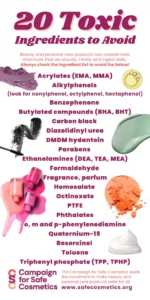
The Wirecutter recently released its updated sunscreen guide, evaluating sunscreens on feel, price, and reef safety – but not touching on ingredient safety.
Yes, sunscreen should protect your skin from UV rays.
But many sunscreens protect your skin while also exposing your body to unnecessary chemicals.
This is a perfect moment to talk about sunscreen safety. After more than 20 years, the FDA finally approved a new UV filter: Bemotrizinol. In September 2024, DSM Nutritional Products submitted a Tier 1 OTC Monograph Order Request to add Bemotrizinol (up to 6%) as a new sunscreen active ingredient. The FDA concluded that it provides broad‑spectrum protection, has low skin absorption, and is rarely irritating.
With that context, let’s take a deeper look at the top four sunscreens Wirecutter recommends – but through the lens of ingredient safety,
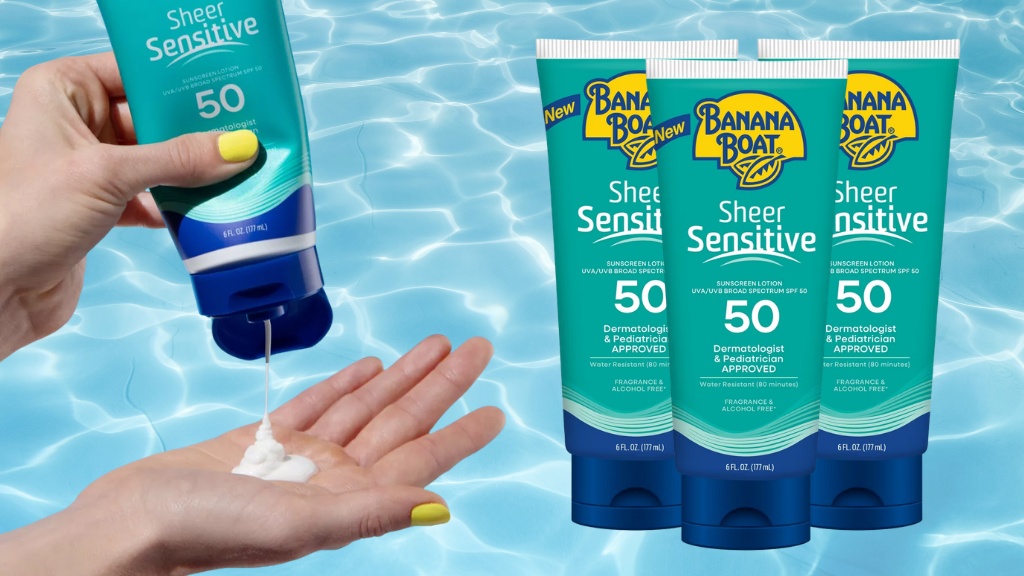
Banana Boat Sheer Sensitive
Wirecutter calls this “a superior chemical sunscreen… lightweight and nongreasy,” but several ingredients still raise caution for people who care about safety beyond performance.
Active ingredients
- Avobenzone — 2.7%
- Homosalate — 7.5%. Note that the EU restricts Homosalate to ≤7% out of precaution due to weak endocrine‑disruption signals in lab studies at high doses.
- Octisalate — 4.5%
- Octocrylene — 5%
Fragrance
- No fragrance nor added fragrance. Fragrance is one of the top allergens in skincare and often hides dozens of chemicals under the single word. Luckily, there’s no need to worry about hidden fragrance blends in this product.
Other ingredients
- PEG‑100 — a flagged inactive ingredient.
- PEGs don’t provide UV protection but can still be absorbed into the skin.PEG‑100 can be contaminated with the carcinogen 1,4‑dioxane during manufacturing.
- Many companies vacuum‑strip PEGs to remove 1,4‑dioxane, but this process is not required under U.S. law.
Other notes
- Not reef‑safe. The sunscreen contains octocrylene, a UV filter linked to coral bleaching and marine toxicity.
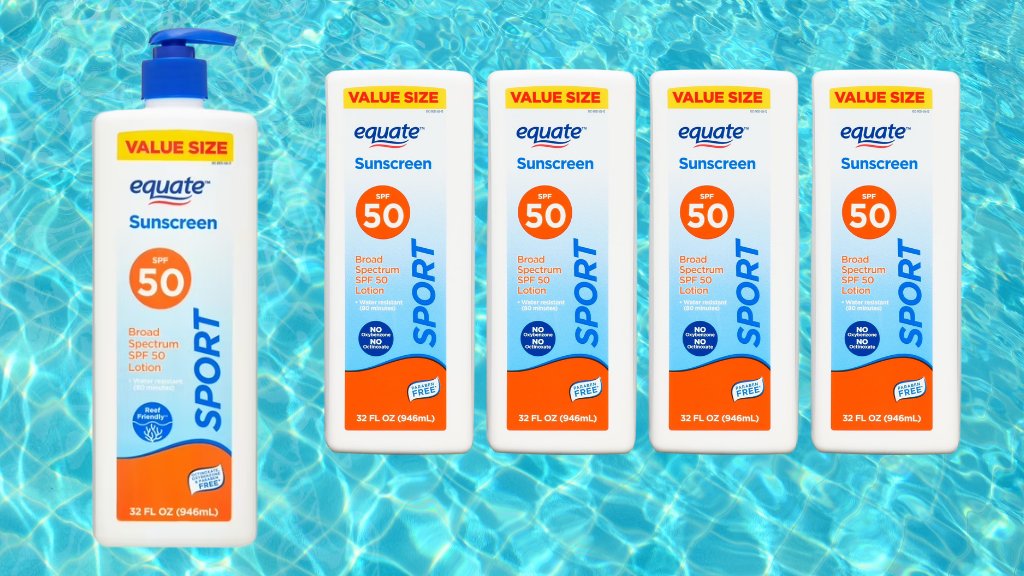
Equate Sport Value Size
Wirecutter recommends this as a super‑budget chemical sunscreen that “rubs in effortlessly,” but the medicinal fragrance and several flagged ingredients make it a less safe choice.
Active ingredients
- Avobenzone — 3%
- Homosalate — 10%. An even higher concentration than in Banana Boat; this raises strong endocrine‑disruption concerns.
- Octisalate — 5%
- Octocrylene — 6%
Fragrance
- Contains fragrance. Fragrance can hide dozens of undisclosed chemicals including phthalates, allergens, and synthetic musks. Wirecutter mentions the possibly unpleasant “medicinal odor,” but the real issue is the health risks associated with what blend of chemicals make up the fragrance ingredient.
Other ingredients
- PEG‑100 — same contamination concern with 1,4‑dioxane, as stated above.
Other notes
- Not reef‑safe. Contains octocrylene.
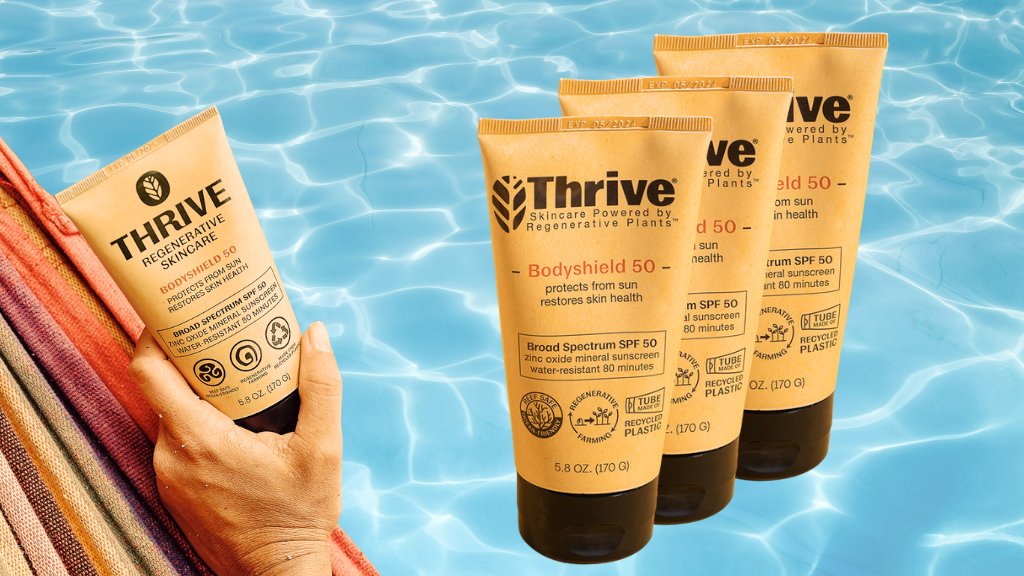
Thrive Bodyshield
A mineral sunscreen using non‑nano zinc oxide. Wirecutter notes it “spreads quickly and absorbs easily,” which is impressive for a mineral formula. However, the “reef‑safe” claim is unregulated, and the natural fragrance oils still raise concerns.
Active ingredient
- Non‑Nano Zinc Oxide — 20%
- Provides UVA + UVB protection
- Low absorption into the body
- Low irritation potential
Fragrance
- No added synthetic fragrance, but contains natural plant oils. CSC still treats natural fragrances as a high‑concern category. These oils are considered sensitizers because some can become phototoxic when exposed to UV.
Other ingredients
- Natural oils impart a fruity scent (as noted by Wirecutter), but they may still trigger sensitivity.
Other notes
- Marketed as “reef‑safe.”
- Avoids the main flagged UV filters for coral bleaching and marine toxicity: oxybenzone, octinoxate, and octocrylene.
- Uses non‑nano zinc oxide, the preferred mineral filter for reef safety.
- Note that the term “reef-safe” is not FDA‑regulated.
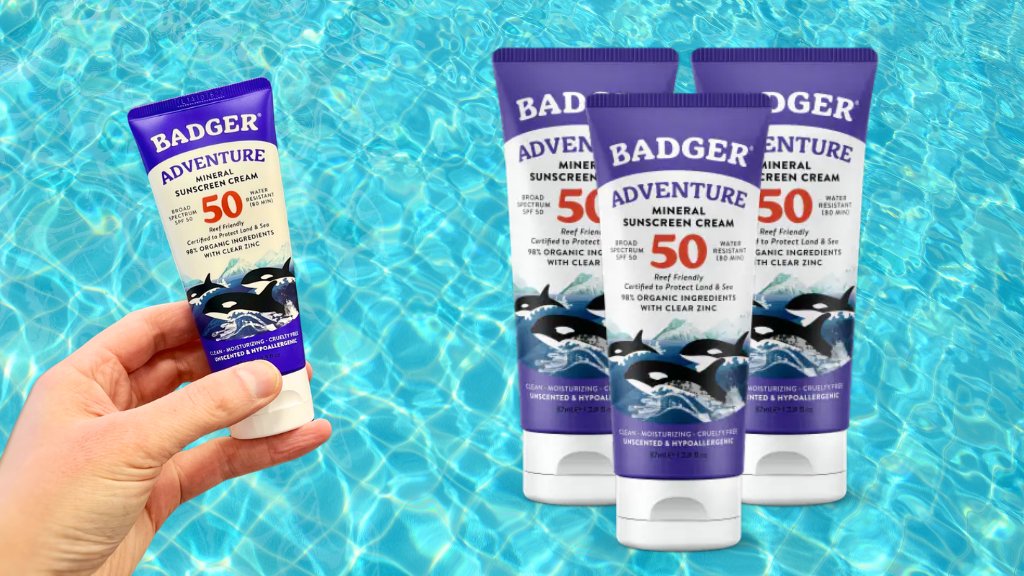
Badger Adventure Mineral Cream
Wirecutter highlights this product as a minimal‑ingredient mineral sunscreen that feels more like a thick balm. It’s harder to rub in and leaves a stronger white cast, but the tradeoff is safe, simple ingredients.
Active ingredient
- Mineral Zinc Oxide — 25%
- Strong mineral protection
- Minimal absorption
Fragrance
- No fragrance nor added fragrance.
Other ingredients
- Only four total ingredients — incredibly minimal.
- Oil‑based formula may feel greasy or heavy for some users.
Other notes
- Considered reef‑safe.
- Uses non‑nano zinc oxide and contains no oxybenzone, octinoxate, or octocrylene.
- Minimal ingredient list reduces aquatic toxicity.
Safety Verdict
After reviewing Wirecutter’s top picks through a safety lens, here is our verdict.
Best pick: Badger Adventure Mineral Cream. This sunscreen has the safest list of ingredients, does not contain unnecessary fragrance, and performs effectively. It may be a little harder to rub in, but “for [some] panelists, it appeared nearly transparent once fully dried down.”
Last pick: Equate Sport Value Size. This sunscreen contains higher levels of Homosalate than other chemical sunscreens and includes fragrance. We recommend avoiding sunscreens with fragrance because they contain undisclosed chemicals.
Focus on Fragrance in Sunscreens
Wirecutter frames fragrance as a “personal preference,” but the reality is more serious.
In the U.S., the term “fragrance” can legally hide hundreds of chemicals, many of which are:
- Endocrine disruptors (EDCs): Low doses of EDC’s, especially during critical stages of development, can increase the risk of adverse health effects, including cancers, neurodevelopmental and neurodegenerative diseases, metabolic disorders, asthma, and immune disorders.
- Sensitizers: Sensitizers can “train” your immune system to react to ingredients it previously tolerated. This leads to redness, burning, itching, or dermatitis.
- Allergens: Allergic reactions from fragrance ingredients most commonly involve the skin or respiratory system (e.g., itchy red skin, wheezing, chest tightness, coughing, shortness of breath, headaches, eye irritation, runny nose, phlegm, etc.)
This is why CSC consistently recommends fragrance‑free sunscreens whenever possible.

Vismai Chitriki
Marketing and Communications Intern